


Water Softener 101: How Water Softeners Work
Your cloudy dishes, shower buildup, or even dry skin could be caused by hard water. While common and not harmful to your health, it can certainly take a toll on your home appliances. The good news is that a water softener system can help tackle this problem. In this guide, we'll break down what hard water is, how to identify it, and what to look for when selecting a softening system for your home.
What Hard Water Does to Your Home
"Hard" water, an odd term, means that your water supply has high levels of certain minerals such as calcium and magnesium. These minerals, while not harmful to drink or use on dishes, clothes, etc., can cause annoying water spots on dishes, soap scum, and soap that doesn't seem to work as well as it should. The minerals can also accumulate over time in pipes, faucets, and appliances, such as coffee makers or water heaters, causing them to work harder. This buildup can reduce water pressure and shorten the lifespan of the pipes and appliances.
How to Tell if You Have Hard Water
Other than bathtub rings that won't go away no matter how hard you scrub, there is a way to measure your water's hardness level. Hard water is measured in grains per gallon (gpg), and anything seven gpg or higher is considered hard. The quickest way to check your home's levels is to contact your local utility provider if you're on city water or use a simple at-home test if you're on a well system. Once you have your hardness number, you can estimate your household's daily water demand by multiplying the number of people in your home, the average water used per person per day (typically 60–75 gallons), and your hardness level in gpg. This calculation helps you choose the right size water softener for your needs.
Example Calculation:
Imagine a family of four with city water measuring 10 gpg and each person using 70 gallons per day. The calculation would be:
4 people × 70 gallons per person × 10 gpg = 2,800 grains per day
This means the water softener you choose should be able to handle at least 2,800 grains of hardness before it needs to regenerate.
We'll discuss how this plays out in a water softener system below.
How a Water Softener Works
A traditional water softener consists of two main components: the mineral tank and the brine tank. Together, they work to remove the minerals that cause hard water, keeping your home running smoothly.
The Mineral Tank
The mineral tank is filled with plastic resin beads. Here's the science behind it: the beads carry a negative charge (think back to chemistry class), while the minerals that make water hard—mainly calcium and magnesium—have a positive charge. As water flows through the tank, these negatively charged beads attract and hold onto the positively charged minerals, effectively removing them from the water that comes out of your taps.
The Brine Tank
The brine tank contains a salt-and-water solution. Over time, the resin beads become saturated with minerals and require regeneration. During this process, the system flushes the beads with brine, washing away the accumulated minerals and recharging the beads with sodium so they can continue softening your water. Regeneration cycles are programmed based on your home's size and daily water usage.
Tank Options: Salt or No Salt
- Salt-based systems are true water softeners; they remove the minerals entirely.
- Salt-free systems are better described as conditioners. They help reduce scale buildup but don't soften the water.
Single-Tank vs. Dual Tank Systems
- Single-tank softeners are the most common choice for homeowners. It's a single tank that takes up less room and regenerates when needed.
- Dual-tank systems allow for continuous soft water by regenerating one tank while the other is still in use, which is helpful for larger households or high-water usage.
Picking the Right Water Softener
When choosing a system, consider the following:
- Grain Capacity: This is the number of grains of hardness the softener can remove before needing regeneration. Larger households or homes with very hard water require higher grain capacity.
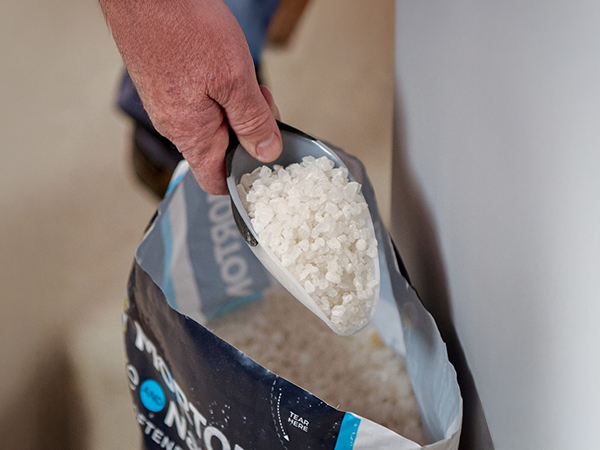
- Salt Type: Water softener salt typically comes in pellets or crystals. Pellets are the most common and safe for most septic systems.
- Other Considerations:
- Space: Make sure there's room for both the mineral and brine tanks.
- Efficiency: High-efficiency models reduce salt and water usage over time.
- Maintenance: All softeners require occasional salt refills and periodic cleaning.
Choosing the right water softener ensures your home enjoys spot-free dishes, smooth laundry, and longer-lasting appliances while keeping your maintenance routine manageable. At McCoy's, we carry the systems, salt, and supplies you need to tackle hard water with confidence. If you're not sure where to start, our team is always ready to help you find the right setup for your home.